Saturday, 30 June.
It’s just over a week since we returned from
the Normandy/Brittany trip and summer has arrived at last. Everything is growing and ripening at
last in the garden and its time to write up another edition of the blog.
Our trip started with a visit to Rambouillet
and an overnight in a Best Western just outside the town. There was a Nespresso machine in our
room which was a very pleasant surprise.
We were tired after the long drive, so just ate at the hotel dining room
and went to bed early. The next
day we explored the Château, all very interesting. It is now the summer residence of the President of France,
and a guest house for foreign dignitaries. The last foreign head of state who stayed there was Vladimir
Putin. It was originally built as a hunting lodge for one of the kings. A creamery (“laiterie”) with milk
fountains and a milk bath was built for Marie Antionette to attract her to
visit, but apparently she didn’t like it there and only visited twice. A thatched cottage was also built for
her as a plaything, completely lined with sea shells. The guide talked in far too much detail, I thought he would
never end. Dates, dates and more
dates, he went on and on. We were
a small group and I spent much of the time trying to work out how I could
escape discreetly.
So much for Rambouillet. We headed to Normandy and the DDay
beaches which was a great deal more interesting.
“Le debarquement”. We stayed in a small town called Benouville, John
picked the hotel because it was said to have a ‘bonne table’ and so it did. The seafood was wonderful, and we had
two beautiful evening meals there.
 The first day was raining so it seemed like a
good opportunity to visit the Bayeux museum. The embroidery, called a tapestry for some reason, was
almost 70 metres long, quite narrow, perhaps barely one metre deep. It tells the great story in a
very entertaining, comic book way, of Edward and William the Conqueror and the
Battle of Hastings 1066. The work
has had such a chequered career, it’s hard to believe how it can have survived
for nearly one thousand years. But
there it was, and wonderful to see.
We listened to a very good audio presentation as we walked along, and I
had to do it twice.
Fascinating. The
comic characters are all carefully embroidered, the boats, horses, animals etc
done in a naive fashion, the story told quite clearly and with a sense of
humour.
 |
| Arromanche |
 |
| Bay at Arromanche |
We found that we had spent the whole morning
there, very easy to do. The rain
was easing and a glimmer of sunshine appeared so it was time to look a DDay
matters.
We walked on the beach at Arromanche exactly, to the day, 68 years after John's father landed there with his regiment: The King’s own Royal Irish Hussars, as part of the DDay landings. The complicated planning of this massive operation was well produced in the Debarquement museum at Arromanche.
 |
| Beach huts near Arromanche |
 |
| Memorial to Engineers |
It was horrifying to discover that during a trial run of the landing in England, a mistake was made and a massive number of young American soldiers lost their lives. And this was even before the real operation began. During the first landing, a large number of Canadians lost their lives fighting the Germans as they landed on the beaches, and were followed by the British army. The numbers of young men who lost their lives, was dreadful to read about. But what an operation it all was, so impressive. The museums were extremely well done, each one concentrating on a different part of the operation. For example I would not have thought about the importance of the engineers, who planned and prepared everything beforehand. They planned a temporary harbour with huge ramps for unloading tanks and machinery. All the parts of which had to be towed over from England by barge in the dark of night and anchored off Arromanche.
 |
| Glider |
We drove around the villages where John’s father’s regiment had battled against the Germans and helped to defeat them.
We later visited the museum memorial at the Pegasus bridge. Another moving experience. There was an example of a glider there built to transport 30 soldiers at a time – just benches along the sides, in the body of the glider – how terrifying it must have been. The gliders were then towed across the channel in the air until they reached the French coast where they were set free and glided to land, mostly accurately. Then there were the parachutists and so on.
 |
| Young American pilot who was killed |

T
he next day we spent all morning at the huge museum at Caen, which dealt with all the politics of the war, the lack of planning, the fact that Hitler rising to power was largely ignored by the other European powers who remained apathetic until he had invaded several countries. It took years to swing into action.
 |
| Oysters at Benouville |
 |
| Lobster at Benouville |
 |
| At Maria's house |
 |
| Seafood at Erquy |
After
absorbing that huge lot of history and information, we set off for Northern
Brittany and stayed at a pretty little bay at Erquy. Again we had wonderful seafood, and pleasant walks on
the beach. We drove across
Brittany to cousin Maria’s house and spent a couple of enjoyable days there, catching up with cousins Maria and Patrick and John's aunt Helen. I picked up my new/old
spinning wheel at last, and gave Maria a few lessons.
 With everything packed in the car again, including the dismantled spinning wheel, we set off for central France, in fact to western Burgundy, not too far from home. We booked into a very simple hotel, an old Relais de la Poste, at Saint Fargeau. Again, the reviews quoted a ‘bonne table’ and much to our delight, it lived up to expectations. When we asked what the ‘plat du jour’ was – the reply had us falling around laughing. Imagine, arriving in France profonde, deepest central France, and finding the ‘plat de jour’ was – guess what: kangaroo!!! They tried to tell us it was from New Zealand, however we corrected that
– it was fun and we explained that we were Aussies. We ate well and enjoyed the kangaroo. This hotel was the nearest
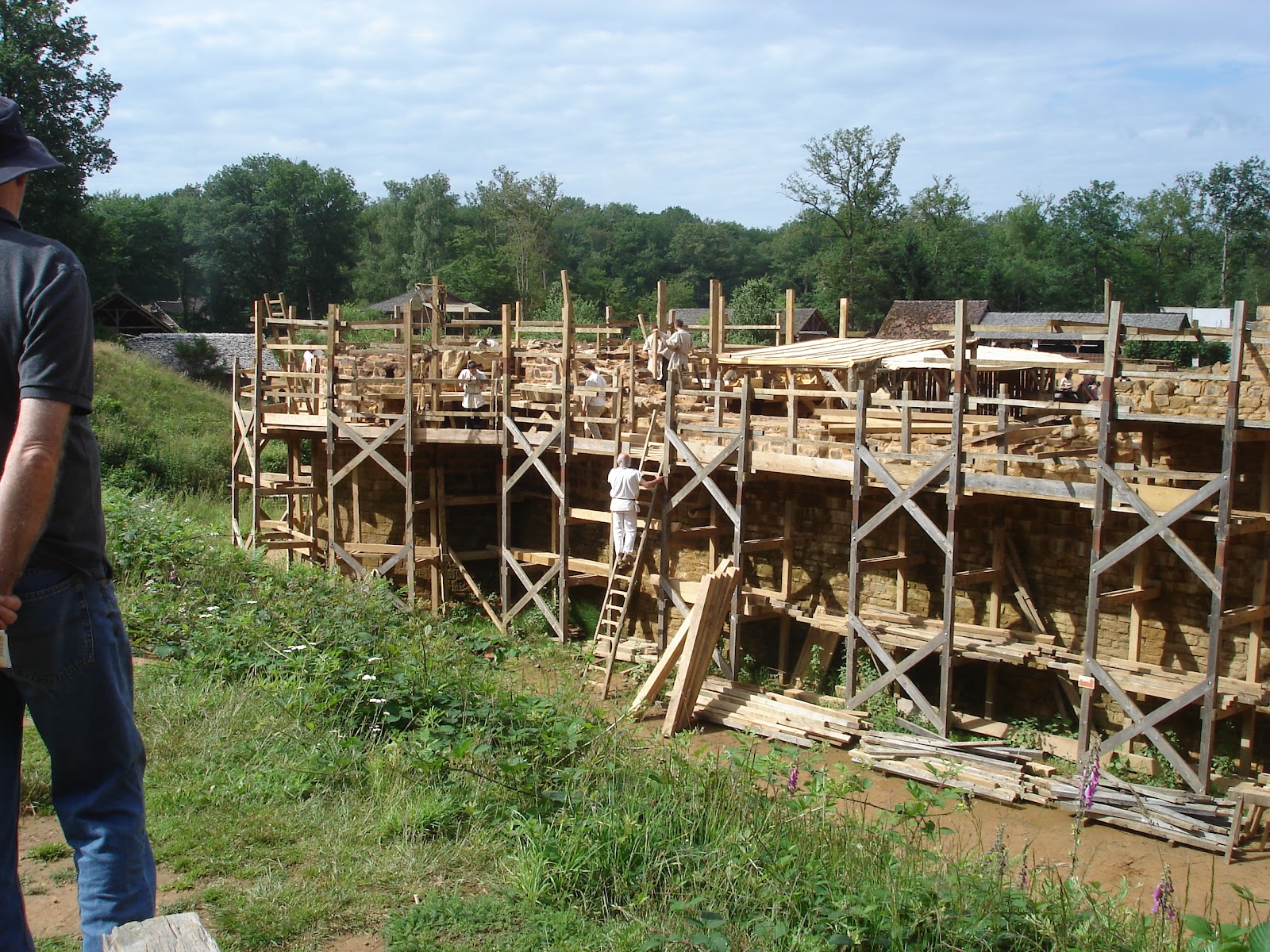
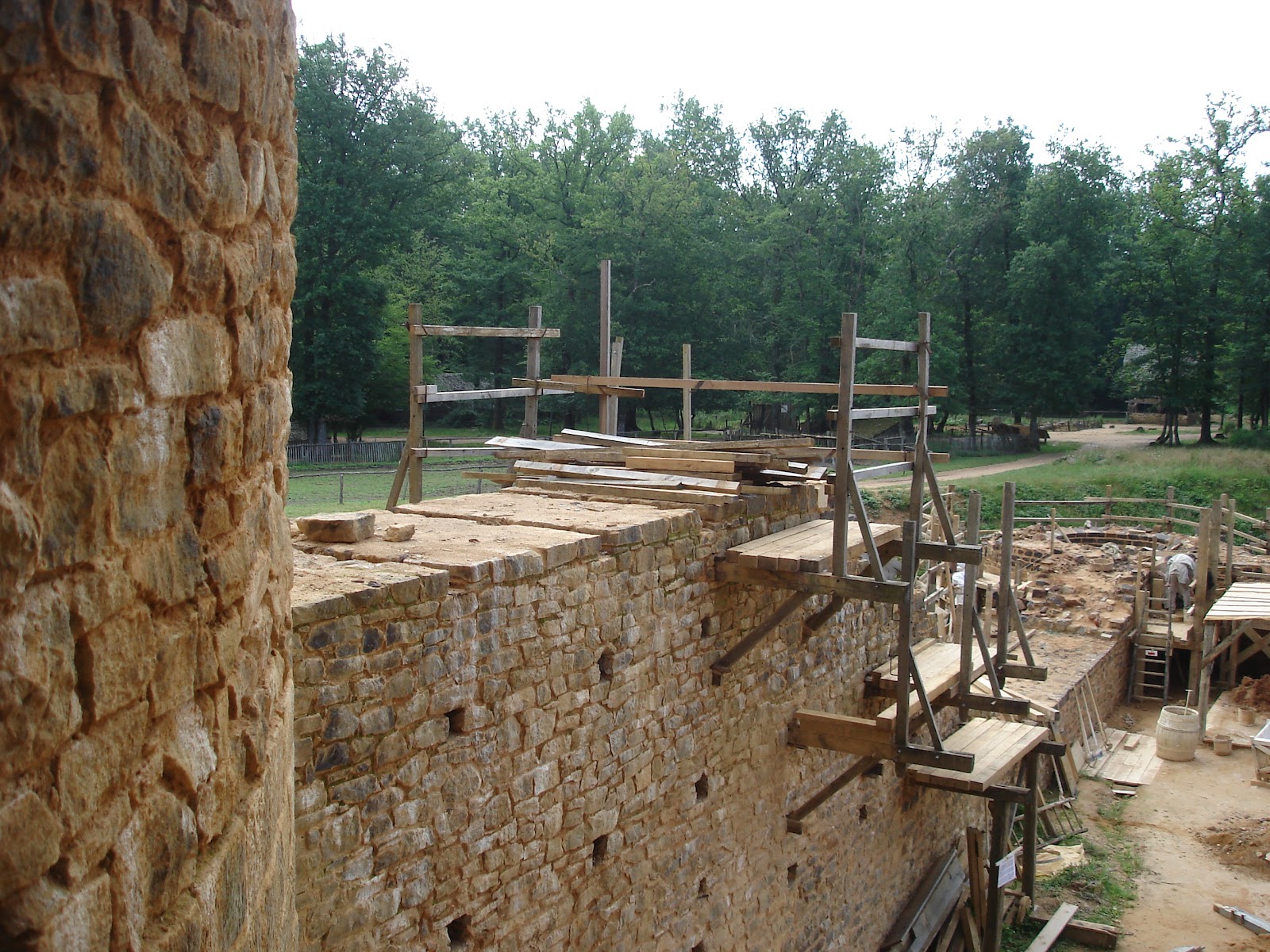
accommodation we could find to enable us to visit the site of a medieval castle
being built at Guèdolon. This is a
huge project, a team of artisans and volunteers are building the castle from
scratch with medieval tools and machinery. It will take almost 30 years to complete. They are well into the project now, and
we found it very interesting to visit.
Part of it is being used as an educational project for French school
children, and there were several groups visiting. The children attend workshops in stone carving and tool
making, most of them looked as if they were enjoying themselves and having fun!!
After
enjoying our educational morning, we set off home, a three hour drive. We arrived back here just as the most
enormous thunder storm broke, with hail stones and heavy downpour. We fled from the car into the house and
waited. In no time the sun was out
and we were able to unpack.
Its
lovely to come back to warm sunshine – summer at last.
Everything is growing well in my veggie patch, which I shall have to protect from our neighbours chickens. There is a mother hen and six chicks which cross the road every day (don't know how they survive) and root around in our compost which they have managed to spread far and wide. They then have an afternoon nap. And when they wake up they look for something nice and fresh like my raspberries and my salad..... I have to keep a close eye on them. Gooseberries and berries are just ready, so starting to pick. We enjoy eating fresh salad every day.
Tonight - our street party!!
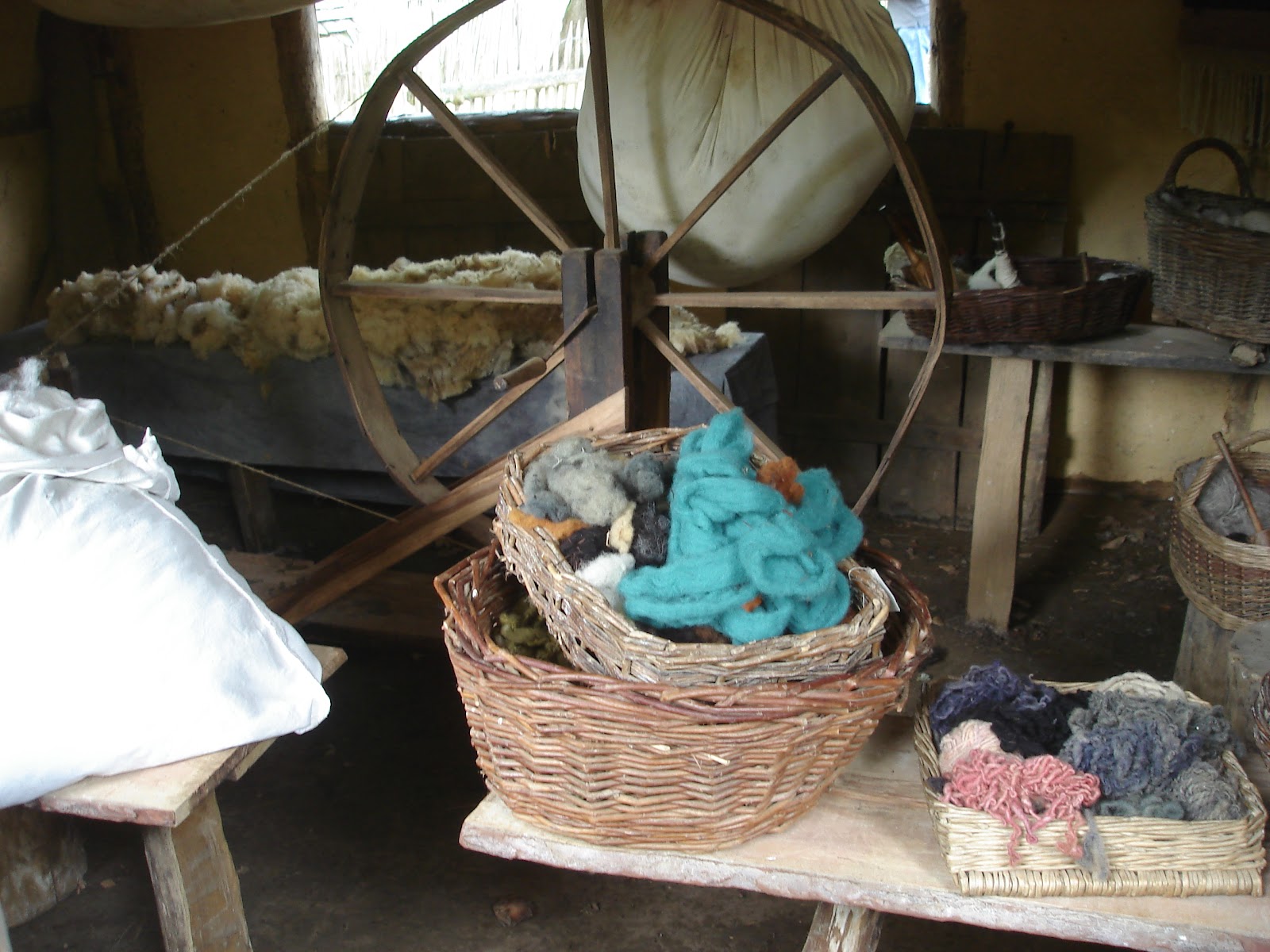
Photos below were taken at the medieval castle building site. When its finished in 1223? it should look like this picture!
 |
| Jersey cows |
 |
| Black pigs - what attractive girls they are!!! |
 |
| Wool dyed from plants, bark, roots and herbs |
 |
| Madder, rhubarb roots, logwood etc |
 |
| Ancient wheel turned by hand |
 |
| Basket making |
 |
| Geese having a bath |
 |
| Stone carving |
 |
| Medieval machinery |
 |
| A sample archway |
 |
| In the great hall |
 |
| Loading medieval cement - sand and lime |
 |
| The forge where all the tools and weapons are made |
 |
| Huge bellows in the forge |
 |
| Wooden slates |
 |
| The punishment stocks |
 |
| Basket making |
 |
| Herbs for dyeing wool |
 The first day was raining so it seemed like a
good opportunity to visit the Bayeux museum. The embroidery, called a tapestry for some reason, was
almost 70 metres long, quite narrow, perhaps barely one metre deep. It tells the great story in a
very entertaining, comic book way, of Edward and William the Conqueror and the
Battle of Hastings 1066. The work
has had such a chequered career, it’s hard to believe how it can have survived
for nearly one thousand years. But
there it was, and wonderful to see.
We listened to a very good audio presentation as we walked along, and I
had to do it twice.
Fascinating. The
comic characters are all carefully embroidered, the boats, horses, animals etc
done in a naive fashion, the story told quite clearly and with a sense of
humour.


 With everything packed in the car again, including the dismantled spinning wheel, we set off for central France, in fact to western Burgundy, not too far from home. We booked into a very simple hotel, an old Relais de la Poste, at Saint Fargeau. Again, the reviews quoted a ‘bonne table’ and much to our delight, it lived up to expectations. When we asked what the ‘plat du jour’ was – the reply had us falling around laughing. Imagine, arriving in France profonde, deepest central France, and finding the ‘plat de jour’ was – guess what: kangaroo!!! They tried to tell us it was from New Zealand, however we corrected that
– it was fun and we explained that we were Aussies. We ate well and enjoyed the kangaroo. This hotel was the nearest
accommodation we could find to enable us to visit the site of a medieval castle
being built at Guèdolon. This is a
huge project, a team of artisans and volunteers are building the castle from
scratch with medieval tools and machinery. It will take almost 30 years to complete. They are well into the project now, and
we found it very interesting to visit.
Part of it is being used as an educational project for French school
children, and there were several groups visiting. The children attend workshops in stone carving and tool
making, most of them looked as if they were enjoying themselves and having fun!!